Showing posts with label venomous. Show all posts

Thursday, June 25, 2009

Curved Spiny Spider


Art
paint the cricket

Animal
The curved spiny spider (Gasteracantha arcuata) is a small orb weaver with a spiny abdomen from southeast Asia. They are sexually dimorphic, the males are much smaller and lack the giant horns. It is thought that the horns make them less palatable to predators. They have a tendency to build their webs in places where they might be disturbed by flying birds so they will actually build visible tuffs of silk into the web, it is theorized that these help the birds avoid their webs.

Tuesday, June 23, 2009

McGregor's Tree Viper


I've had a really bad internet connection the last couple of days. I passed the Network + it was awful.

Art
assemble cricket and cory cat

Animal
The McGregor's Tree Viper (Trimeresurus mcgregori) is a lovely colorful snake with variable marking from two islands of the Philippines. There was some debate as to whether it is a full species or a subspecies of Trimeresurus flavomaculatus. It is a venomous snake with a very painful bite, but it is not deadly. It was discovered by a bird specialist Richard C.Mcgregor in 1907, and upon discovery the snake bit him, so he also learned about the potency of it's venom. Unlike many snakes, these snakes are actually very dependent on sight most snakes get most of their sensory input through smell and heat.

Wednesday, May 27, 2009

feathered tree viper


Art
Goal for the week 17hrs
try to finish the sphinx

Animal


The feathered tree viper (Atheris hispida) is a small strange viper from central Africa. They have these long scales that bristle off their body in a way that one usually only sees in drawing of dragons and not so much in actual reptiles.  Like the Amazonian snail eater I mentioned a few weeks ago these also seems to specialize in soft bodied invertebrates. They tend to hang out basking on the very tops of trees. They do very poorly in captivity with a very high mortality rate even among experienced keepers.


Wednesday, April 29, 2009

White-margin stargazer

Sorry today the post seems to have shown up on the blog long before I finished it. I'm not sure how that happened. I blame a cat.

Art
Goal for the week 17hrs
today
work on the sphinx

Animal

The white-margin stargazer (Uranoscopus sulphureus) is found in southern Asia and northern Australia. They spend most of their time buried under the sand with only their eyes and mouth exposed. They have cirri along the edge of their mouth to help keep it clear of sand. On their tongue they have a worm-like structure that they use to lure in fish (that is not what the brown thing is in this picture I think that is just a piece of seaweed). They have two spines above their pectoral fins with which they can administer venom.

Thursday, April 23, 2009

Striped Pyjama squid

Bill is trying to get Stuart to learn programming. 

Art
Goal for the week 15.5hrs
Today
Work on the sphinx

Animal
The Striped Pyjama squid (Sepioloidea linolata) is a golfball sized cuttlefish from southern Asia and northern Australia. It is one of only two known poisonous cuttlefish. They have little finger-like projections around their eyes to help keep sand out of them.

Tuesday, April 14, 2009

Tentacled Snake

Stuart is participating in creating some sort of mass rpg-blogger campaign setting.  He has a few fun civilizations planned. 

Art
Goal for the week 18hrs
Today
Lop off Serenity's arms
Wrap Serenity in bubble wrap
Drill into the base and add the weights
Plug up the drilled holes with apoxy
work on the sphinx

Animal
The tentacled snake (Erepeton tentaculatum)from Thailand, Cambodia, and Vietnam has several unusual features. It is the only reptile that has two heavily muscled moveable tentacles on the front of it head. There tentacles are theorized to be sensory organs not unlike the barbs one would find on a carp. They are venomous, but have short rear fangs and venom that does not have a long lasting effect on humans. They are fully aquatic and have developed an odd J shaped strike pose that gives them maximum power underwater. As an adaptation to underwater life they also are ovoviviparous, meaning that their eggs develop fully internally but their young are fed with a yolk rather then from the mother's body. Their eyes are also very dorsally located for a snake.

Wednesday, March 11, 2009

Egyptian Cobra


Art
Goal for the week 16hrs
Today
Lunacon do the forms so that I can mail it out
find a new con for April
work on the guy with the Anubis mask

Animal
Mythology 
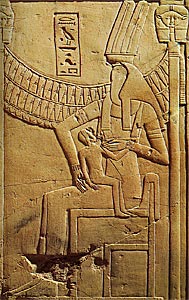
In ancient Egyptian mythology the Egyptian cobra (Naja Haje) plays a nearly opposite role then the horned viper. Probably the best known association in Egyptian mythology with the cobra is that with the goddess Wadjet, who represents lower Egypt, she is generally depicted with Nekhbet the the vulture goddess of upper Egypt or alone on the king's headress as the uraeus. She is also depicted as the eye of Horus, or the Wadjet eye, and she was combined with Bast and Mut on occasion (in the later periods when they were sticking gods together). The cobra was also associated with the goddess Renenutet who was often depicted as a cobra with a woman head or a goddess with an entire cobra as a head. Renenutet was believed to bring the Ren part of the soul "the true name" to a new born during the first day of their life. She also had associations with fertility. It is also likely the case that this  cobra would have been the snake Cleopatra killed herself with rather then an asp, as we would think of one as this snake was also called an asp during that period.


Friday, February 27, 2009

European cat snake

Art
Goal for the week 11.75hrs
today
still sanding
buy a few (3 or so) little boxes for skull boxes

Animal
The European cat snake (Telescopus fallax) is found mainly on Greek islands and also the island of Malta. They are mildly venomous but are rear fanged and poses little threat to human. Lizards are their main prey, particularly geckos, which they inject with their rear fangs and then follow until the prey is subdued. These snakes have also gotten associated with an Orthodox miracle. On the island of Cephalonia, in the village of Markopoulo during the festivities to the Theotokos between August 5 and August 15 these snakes are said to come in numbers to the temple. The legend goes that nuns being attacked by pirates in 1705 prayed and were transformed into snakes to escape the pirates. I'm not sure if the nuns were supposed to have stayed snakes. (For former Necropolitians and House of Thornes in the know, the randomness of this miracle has a feel somewhat similar to "the miracle of the Christmas bats and the reasonably priced alcohol". Have you considered a reoccurring element?)

Monday, February 23, 2009

Southern Blue-ringed octopus

Art
goal for the week 20hrs
today
still sanding

Animal

The Southern Blue-ringed octopus (Hapalochlaena maculosa) is a golf ball sized octopus from the south coast of Australia that is considered to be one of the world most venomous animals. Most of the time it is a tiny brown octopus, but displays it's bright blue rings when threatened.  The toxin it can deliver with it's painless bite is a powerful enough neurotoxin that it can kill an adult in minutes.  There is no known antidote, but individuals may be saved it artificial respiration is started before the cyanosis and hypotension develop. If the poisoned individual survives more then 24 hours then they will generally survive. The octopus's poison come from a symbiotic relationship with bacteria that live in it's saliva, it is also immune to the bacteria's chemical as it has evolved different sodium channel receptors then most animals. Fortunately they are relatively docile creatures and do not generally bother humans unless significantly harassed or stepped on.

Monday, February 2, 2009

Egyptian Horned Viper

Stuart and I started the new game last night. I hope it went well character creation took a lot longer then we we thought so we only got through about a fourth of what we had planned.

Art
goal for the week 20hs
Today 
still sanding

Animal


Mythology
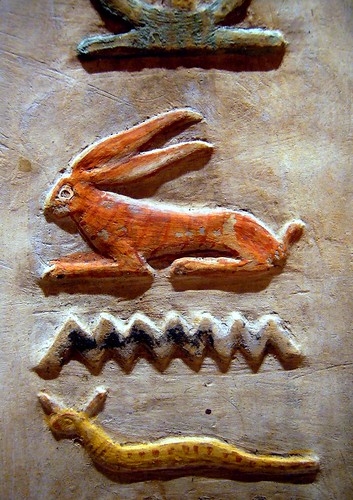
It can be difficult to talk about Egyptian mythology with certainty, because there are so many different versions of things.  In my favorite Egyptian creation myth (I'm not sure what city it is from I heard it in my archeology of Ancient Egypt class, it might be a few of them combined and some speculation) the world was created by primordial reptiles (probably the Ogdoad) that created a few of the gods and then mostly wandered off (presumably they had other primordial reptile things to do) they left behind one of their own, Apep to be the destruction of the world. I have alway liked the metaphor of that one with the world coming from a sort of uncaring chaos that presumably wandered off to go make other worlds. Apep is generally represented as an Egyptian horned viper (Cerastes cerastes) this snake was also used to represent the "F" sound to simulate the sound it made as it moved through the sand. Its association with Apep made it feared enough by the ancient Egyptians (in some places) that they would carefully sever the heads of that hieroglyph to avoid Apep's influence. It was also thought to represent Apep undamaged gave him more power. It was thought by ancient Egyptian's that every night Apep would attempt to eat Ra (in many cases there were some variants that involved other gods) and every night Ra in the sun boat and a small army of gods including set and the dead would kill him (sort of) and Apep's blood would dye the dawn pink.


Sunday, February 1, 2009

Hooded pitohui

I discovered today that one of the types of boxes I had gotten came all defective the lids won't shut. I've had to break them all open (a thing I only do in a way I can save them about 50% of the time) and will have to rework them.  

Art
still sanding 
repair some of the boxes that had lids that would not close

Animal

Rerun from livejournal
The hooded pitohui (Pitohui dichrous) was the first poisonous bird discovered and is the most poisonous of all known birds. Hooded pitohuis  acquire their complex alkaloid toxin through their diet, in a similar manner to a poison dart frog. The toxin is concentrated in the feathers it causes a hot burning sensation that affects the body's nervous tissue when ingested. When threatened they also release a pungent smell. Hooded pitohui are found in New Guinea in rainforest habitats.  These birds also breed in cooperative groups during one study of a nest in 1995 the researchers were mobbed by five of the birds. They retreated and later observed the group cooperatively feeding the young. Hooded pitohui also occasionally flock with other species of birds such as Raggiana birds of Paradise (Paradissae raggiana) these birds benefit from the hooded pitohui's toxin. The Kalam in New Guinea call this bird the wobob and evoke it in their war magic for its agility in dodging arrows. Wobob also refers to an uncomfortable itchy skin disease.

Saturday, January 31, 2009

Pygmy slow loris

We had a little bit of a scare today from Kamali she seemed to have injured her leg and was not using it. We contacted the vet worried she had broken it but she started using it again normally shortly afterwards so she may have jumped off a table badly.

Art
Art goal for the week 12.75 hours
Today
sanding still

Animal
The pygmy slow loris (Nycticebus pygmaeus) is a rare prosimian primate that inhabits Vietnam, Laos, China and Cambodia. Slow lories have glands on their elbows, the sebaceous gland, that produces a substance that when mixed with saliva becomes poisonous. When threatened they tend to poison their teeth before biting. They have long canine teeth that help to deliver the poison and their smaller front teeth slope backward in such a way to conduct the saliva along the canines. They will also coat their young in poisonous saliva when they are unattended to protect them from predators. They can also emit a foul smelling substance when threatened.  This species of slow loris is a nocturnal omnivore that seems to have a preference for gums (plant juices). Their hands and feet have a muscle and blood vessel set up that allow them to maintain a ridged grip for long periods of time somewhat effortlessly. They were fairly endangered during the Vietnam war due to the tremendous habitat destruction, but they have recovered somewhat since then and there are thought to be around 70,000 of them in existence.  

Wednesday, January 7, 2009

Striped Eel Catfish

I found out the live 365 station I'd been listening to will stop existing in March if you would like to check them out they can be found here. It is sad. Other then that, I got a registration sticker for my car today. As far as art I have exciting options available to me currently I can sand the 214 (well less now) similar boxes or I can sculpt scales. I may have to throw another project in so I don't lose my mind or stop working. Oh I did forget I'm doing Cryptic ConFusion in late January I put up a post in my other art Journal.

Art
goal for the week 16hrs
Today
sand boxes (I have a lot of boxes)

Animal
photo by Jens Petersen
The striped eel catfish (plotosus lineatus) is a saltwater catfish from the Indo-Pacific. They are the only catfish that regularly lives around reefs and they have a highly venomous serrated spine on their doral and pectoral fins that is occasionally fatal. The brightly striped juveniles then to hang out in large schools of up to 100 individuals in roughly a ball of fish shape.


Tuesday, January 6, 2009

Amazon milk frog


Art
Goal for the week 17.5 hours
Today
I must ship out the Cryptic Confusion show this is the last day I can ship. I only have to add foam to the box and ship it.

cast the skull for the commission box

sand boxes

Animal
The Amazon milk frog (Trachycephalus resinifictrix) is a 2 to 4 inch arboreal frog from South America. They are called "milk frogs" as they secrete a white poisonous substance when threatened that resembles milk. They are not unheard of in captivity though tend to mostly be kept by zoos and experienced frog hobbyists as they are difficult to keep. They have been bred in captivity since it was discovered that they will only breed in the hollows of large trees. The mere presence of Sir David Attenboroughs also helps with their breeding process if you ask the London zoo, who had their milk frogs breed after years of attempting to coax them when he came to visit (it may have also been the new humidifier they added to their tank) .